Mobile App Development for iOS & Android

Build a mobile app around the tasks your customers and teams need to complete.

Macromodule provides mobile app development services from product planning and UI/UX design to application development, backend integration, testing, store submission, and ongoing improvement. We build new products and complete or modernize existing apps around your users, business workflows, and operating requirements.

iOS apps · Android apps · Cross-platform development
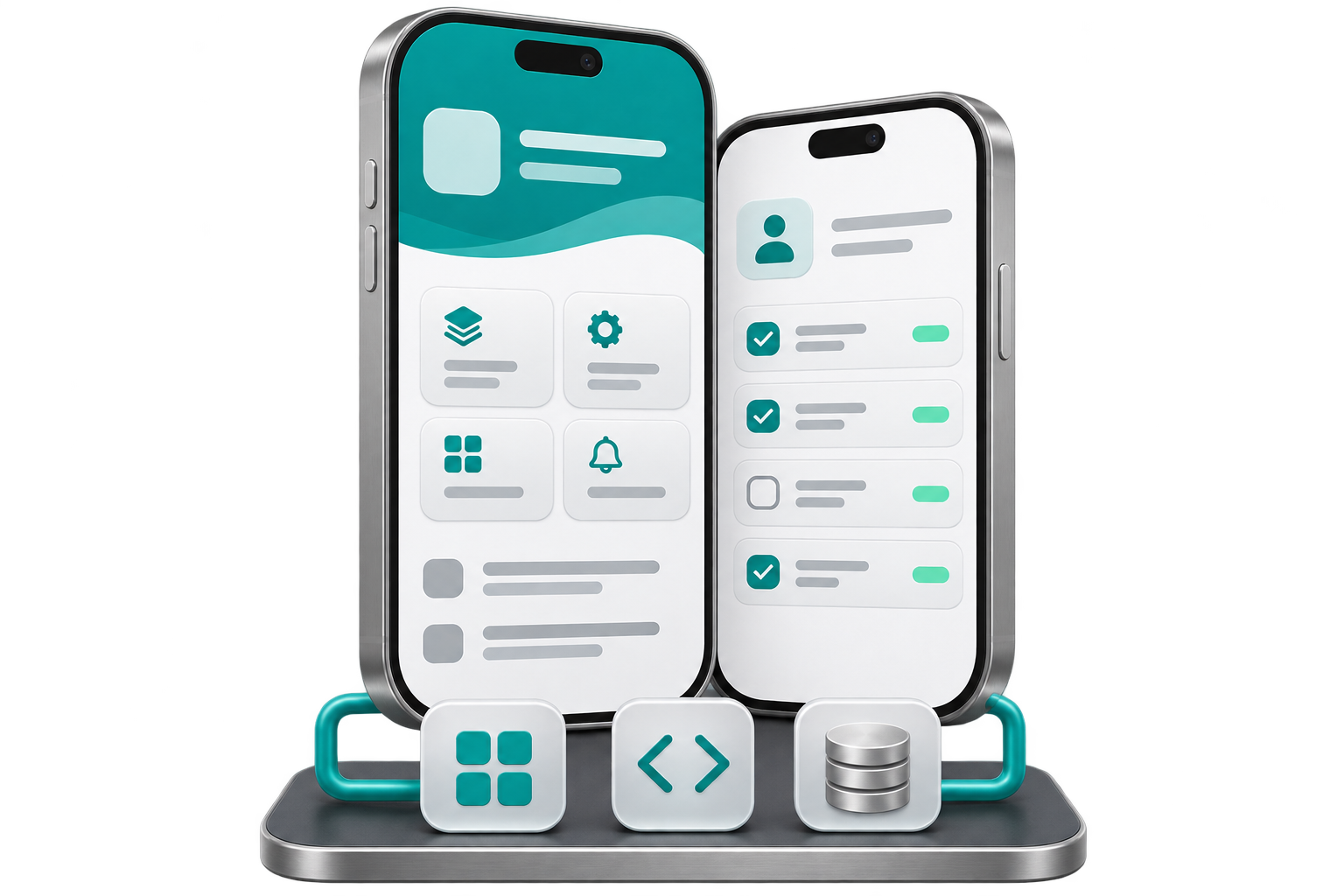
Mobile app interfaces with design, development, and database components.

Why Choose Macromodule for Mobile App Development?

A useful mobile app brings interface design, device behavior, backend services, and business rules together in one consistent experience.

We plan the product and its supporting systems together, with clear priorities for usability, permissions, testing, deployment, and maintenance.

Product & User Focus

Product & User Focus

Define the people using your app, the tasks they need to complete, and the features essential to the first release. Product decisions connect to clear user journeys and business priorities.

Platform-Appropriate Development

Platform-Appropriate Development

Select native or cross-platform development around your device features, existing codebase, budget, and maintenance needs. We explain the tradeoffs before committing to the application architecture.

Connected Backend Systems

Connected Backend Systems

Bring authentication, APIs, databases, administration, and third-party services into the delivery plan. Mobile behavior follows the business rules enforced by the backend.

Mobile-First UI/UX

Mobile-First UI/UX

Design navigation, forms, content, and interaction states for small screens and touch input. Account for accessibility, interrupted tasks, loading, empty states, and errors.

Testing Across Real Conditions

Testing Across Real Conditions

Validate important journeys across agreed devices and operating-system versions. Include permissions, connectivity changes, interrupted sessions, and integration failures where relevant.

Launch & Maintenance Planning

Launch & Maintenance Planning

Prepare the app, store materials, deployment configuration, and technical handover. Define support ownership and a practical path for updates after release.

Our Mobile App Development Services

Build a new application, extend an existing product, or complete unfinished work. Our services cover the mobile interface and the supporting engineering needed to release and operate it.
01

iOS App Development

Create applications for iPhone and, where required, iPad, with interfaces and behavior shaped around the intended devices. Scope can include authentication, device features, notifications, subscriptions, and backend integration. We plan testing, signing, release configuration, and App Store submission as part of delivery. Outcome: An iOS application prepared for the agreed release process.
02

Android App Development

Build Android applications around your users, supported devices, and business workflows. We account for screen sizes, permissions, connectivity, background behavior, and external services within the defined scope. Delivery can include device testing, release builds, and Google Play submission. Outcome: An Android app validated against agreed device and workflow requirements.
03

Cross-Platform App Development

Develop iOS and Android applications using a shared application codebase where it suits the product. We assess Flutter or another appropriate framework against device integrations, platform-specific requirements, existing code, and long-term maintenance. Native components can be added when needed. Outcome: A cross-platform product with a clear plan for platform-specific behavior and updates.
04

Mobile App UI/UX Design

Translate product requirements into user journeys, wireframes, interface designs, and interactive prototypes. We design navigation, onboarding, forms, permissions, loading states, error handling, and reusable components. Validate the important flows before expanding implementation. Outcome: A documented interface and interaction direction ready for development.
05

Backend, APIs & App Integrations

Connect the app to the systems required to operate it. Scope can include account services, databases, admin tools, payments, notifications, search, maps, analytics, and existing business APIs. Define server-side permissions, validation, retries, and integration failure handling. Outcome: Connected application workflows with responsibilities clearly divided between device, backend, and third-party services.
06

App Completion, Modernization & Support

Assess and improve an existing mobile app, including unfinished features, interface problems, dependency updates, integration defects, and release issues. Preserve useful work and scope refactoring or migration when justified. Ongoing work can cover crash investigation, maintenance, and planned feature releases. Outcome: A practical improvement plan and a maintainable path for continued delivery.

Connected Mobile Apps. Reliable Backend Foundations.

Plan how the mobile interface, application state, business data, and external services work together before expanding the feature set.

Your mobile app solution can include:
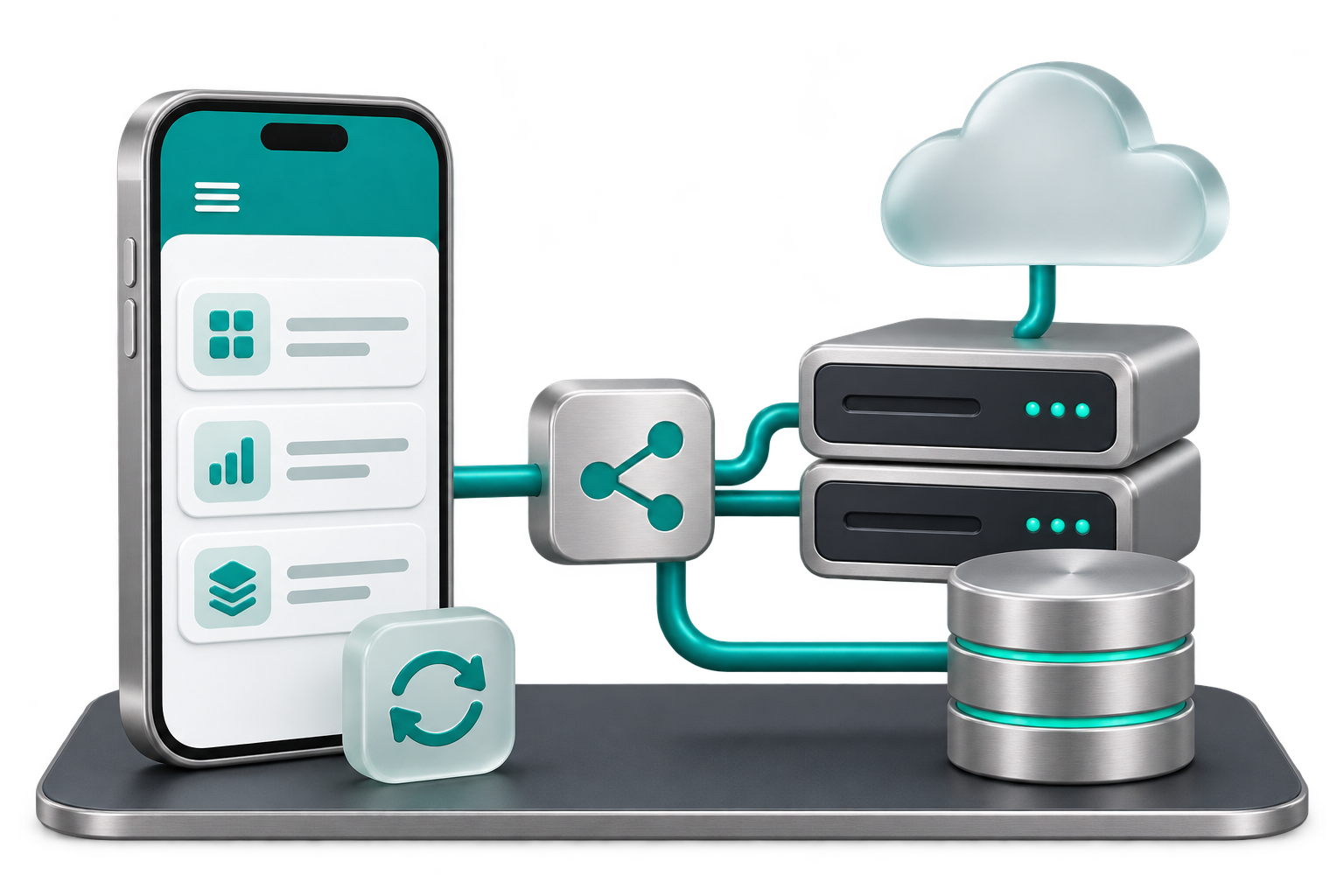
Mobile Interface & Application State: Navigation, reusable components, local storage, session handling, and consistent loading, empty, and error states.
Identity & Access Control: Account flows, authentication, backend authorization, role permissions, and appropriate handling of sensitive device storage.
Backend & Data Services: APIs, database models, validation, background jobs, and administration tools supporting the product’s business rules.
Device & Third-Party Integration: Notifications, camera access, location, payments, and other capabilities selected around the application’s requirements.
Connectivity & Synchronization: Defined offline behavior, retry limits, duplicate-action handling, and conflict rules where the app synchronizes data.
Release & Operational Visibility: Build configuration, crash reporting, application logs, usage events, and deployment guidance within the agreed scope.
Mobile application connected to APIs, servers, cloud services, and a database.

Our Mobile App Development Process

Move from a defined product scope to a tested release through reviewable stages. Estimates account for modern development tools and realistic implementation efficiencies, alongside design, integration, device testing, and release requirements.
01

Discovery & Product Scope

Define users, goals, core workflows, business rules, platforms, integrations, and operating constraints. Establish priorities, acceptance criteria, and the scope of the first release.

02

UI/UX & Technical Planning

Create the important user journeys, screens, and interaction states. Agree native or cross-platform architecture, backend responsibilities, supported devices, and the delivery plan.

03

Application & Backend Development

Build features in reviewable increments, connecting the mobile interface with APIs, data services, administration, and approved device integrations.

04

Device Testing & Validation

Test critical user journeys and relevant failure scenarios across agreed devices and operating-system versions. Address defects and document unresolved issues before the release decision.

05

Store Submission & Release

Prepare signing, release builds, store information, review access, and the agreed rollout. Support submission and responses to review feedback; store approval remains with the platform.

06

Monitoring & Continued Improvement

Hand over the agreed source, configuration, and operating guidance. Ongoing support can cover crashes, integration changes, maintenance, and feature releases based on product feedback.

Featured Case Studies & Proof of Work

Explore how we architect, engineer, and deploy high-availability enterprise systems for real-world production environments.
Group 1597884228
Custom Software Solutions

Sequoia Wireless

Telecom customers faced a slow and complicated enrollment process for LifeLine wireless services.

ZAH
Blockchain

ZAH

Users needed an accessible way to purchase and send digital gift cards using cryptocurrency.

Learn Spot
Custom Software Solutions

Learn Spot

Educators needed one cloud platform to create courses and monitor student learning.

Mobile Applications for Real Business Workflows

We shape the app around the user journeys, information, transactions, and operational requirements of your product. The following examples illustrate the types of workflows we can scope.
Engineered for High-Compliance Sectors
01
01

FinTech & Digital Wallets

Account access, transaction journeys, asset views, payment integrations, and activity tracking. Custody, signing, recovery, and specialist review requirements are defined where relevant to the product.

02
02

Healthcare & Patient Services

Appointment booking, provider discovery, patient-facing information, and administrative workflows. Scope data handling, permissions, hosting, and applicable specialist requirements before development.

03
03

Retail, Commerce & Loyalty

Product discovery, shopping journeys, checkout, order updates, and loyalty experiences. Connect the app to product, inventory, payment, and fulfillment systems as required.

04
04

Logistics & Service Marketplaces

Booking, dispatch, delivery updates, location features, and customer-provider interactions. Define user roles, task status, notifications, and handling of interrupted connectivity.

05
05

SaaS & Internal Business Apps

Mobile access to customer platforms, dashboards, field operations, approvals, and team workflows. Integrate with existing APIs and enforce permissions across mobile and backend systems.

Launch Your App. Plan What Comes Next.

A mobile product needs a clear operating plan after release. Device software, dependencies, integrations, and user requirements will continue to change.

We define the handover and available support around your product, with clear responsibilities for monitoring, maintenance, urgent issues, and future development.
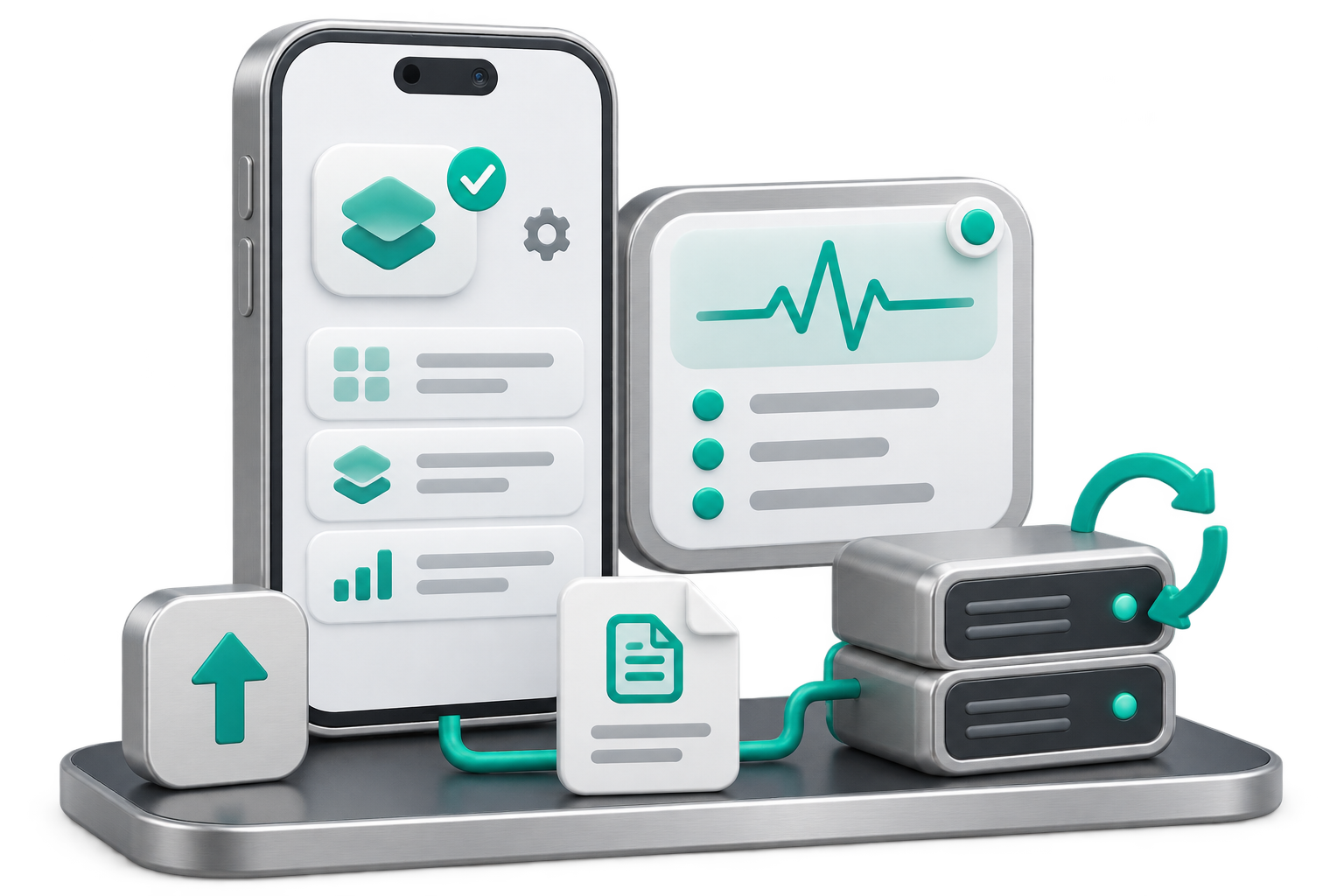
App Launch, Handover & Ongoing Support

Prepare the Release: Coordinate the agreed builds, configuration, store materials, review access, and rollout steps.
Monitor Important Failures: Configure agreed crash reporting, error visibility, and alerts while limiting sensitive information in telemetry.
Define Support Ownership: Identify the client contact, issue-reporting route, escalation process, and agreed support coverage.
Document the Handover: Provide the agreed source, account responsibilities, setup instructions, integration details, and release guidance.
Plan Maintenance & Improvements: Scope dependency updates, operating-system compatibility work, integration changes, and new features through a prioritized backlog.
Mobile app release, monitoring, technical handover, and ongoing updates.

Benefits of Custom Mobile App Development

01
Mobile app development benefit

Fit Your Users’ Tasks: Design mobile journeys around the work your customers and teams need to complete.

02
Mobile app development benefit

Connect Business Systems: Bring relevant data, transactions, and services into the application experience.

03
Mobile app development benefit

Choose an Appropriate Platform Strategy: Align native or cross-platform delivery with device and maintenance requirements.

04
Mobile app development benefit

Handle Real Operating Conditions: Plan for permissions, connectivity changes, failed requests, and interrupted tasks.

05
Mobile app development benefit

Release With Clear Acceptance Criteria: Validate agreed workflows and record remaining issues before rollout.

06
Mobile app development benefit

Prepare for Continued Development: Establish source access, technical handover, and defined support responsibilities.

Frequently Asked Questions

Answers about mobile platforms, existing apps, development scope, costs, testing, store submission, and support.

We provide product discovery, mobile UI/UX design, iOS and Android development, cross-platform development, backend and API integration, testing, release preparation, and ongoing improvement. We can also assess and complete an existing app. Deliverables and responsibilities are agreed around your product scope.

Yes. We assess whether separate native applications or a cross-platform approach suits the requirements. The decision considers user experience, device features, existing code, platform-specific behavior, budget, and long-term maintenance. Supported devices and operating-system versions are agreed before implementation.

The choice depends on the product. Native development can suit extensive platform-specific requirements, while Flutter can support a shared application codebase across iOS and Android. We assess device integrations, interface expectations, existing systems, testing, and maintenance before recommending an approach. Platform-specific work may still be required with a shared codebase.

Yes, where the relevant code, configuration, and access are available. We assess setup, architecture, working features, dependencies, integrations, and release status before defining a completion plan. Useful work is preserved, with refactoring or replacement proposed where the condition of the codebase justifies it.

Yes. Design work can include user journeys, wireframes, interface designs, reusable components, and interactive prototypes. We cover navigation, onboarding, forms, permissions, loading, errors, and other states required for the agreed workflows. The design scope and handover format are confirmed before work begins.

Backend services and administration can be included in scope. We first assess whether your existing APIs and systems meet the product requirements. New work may include authentication, databases, business rules, background jobs, reporting, and role-based administration. Responsibilities between the app, backend, and external providers are documented.

Yes, subject to device capabilities and the supported interfaces of the selected services. We assess permissions, authentication, data handling, platform constraints, and failure behavior. Third-party accounts, usage charges, and any required approvals are identified during planning.

Offline behavior can be included where it suits the workflow. We define which information is available locally, which actions can be queued, and what happens when connectivity returns. Synchronization needs explicit rules for conflicts, retries, duplicate actions, and sensitive data stored on the device.

We scope authentication, backend authorization, validation, device storage, transport protection, and permissions around the application’s data and workflows. Sensitive information in logs and analytics is considered during setup. Products with additional privacy, security, or regulatory obligations may require separately scoped specialist assessments.

Testing follows the agreed scope, supported devices, and operating-system versions. It can cover core journeys, permissions, screen layouts, interruptions, connectivity changes, integration failures, and relevant performance checks. Device coverage and any specialist security or extensive load testing are defined before the release plan is agreed.

Cost depends on platforms, design complexity, features, integrations, backend requirements, existing code, testing coverage, and support. Our estimates account for realistic efficiencies from modern development tools and the remaining engineering work. Hosting, store accounts, third-party subscriptions, and usage-based charges are identified separately.

The schedule depends on the product scope, design readiness, integrations, existing systems, testing requirements, and release dependencies. We confirm the delivery plan after discovery and may divide the work into an initial release and later increments. Store review and external approvals can affect the public launch date.

We can prepare the agreed release builds, store information, review access, and submission materials, and help respond to review feedback. Required account access, supporting information, and responsibilities are agreed before submission. Platform approval is determined by the store, so approval or a specific review date cannot be guaranteed.

Ownership, third-party licensing, account control, and handover responsibilities are defined in the agreement. The delivery can include the agreed application source, backend code, configuration, and documentation. We agree who controls the store and infrastructure accounts and how access is managed before release.

Yes, under an agreed support arrangement. Scope can cover crash investigation, defects, dependency updates, operating-system compatibility, integration changes, and planned improvements. Support coverage, response expectations, escalation routes, responsibilities, and recurring charges are defined separately.

Let's Build Your Next Digital Product

Whether you are launching a new platform, modernizing legacy systems, or expanding engineering capacity, Macromodule Technologies helps you move forward with clarity and confidence. We support you across product discovery, technical architecture, UI/UX design, software development, quality assurance, cloud deployment, and continuous improvement. By understanding your core business goals early, we define a clear, risk-free delivery roadmap before writing a single line of code.

From AI-powered platforms and custom enterprise software to blockchain systems, mobile applications, cloud infrastructure, and data-intensive products, we engineer secure, scalable solutions built around your operational strategy. Our focus isn't just on launching—we build a flexible technical foundation that evolves as your users, data, and business requirements grow.

Partner with an engineering team that takes complete ownership, communicates transparently, and stays laser-focused on delivering measurable, long-term value.

Discuss Your Project

Our Offices:

Head Office<span class="gradient-text"> (USA) </span>

Head Office (USA)

Address: 28 W Flagler St Ste 300B #324 Miami, FL 33130

Phone: +1 (321) 364-6867

Email: consultant@macromodule.com

Regional Office<span class="gradient-text"> (UAE) </span>

Regional Office (UAE)

Address: Business Centre, Sharjah, United Arab Emirates

Phone: +971 55 154 7284

Email: consultant@macromodule.com

Innovation Hub <span class="gradient-text"> (Pakistan) </span>

Innovation Hub (Pakistan)

Address: 61 C, Pia Housing Scheme, Lahore 54000

Phone: +92 (339) 0134700

Email: consultant@macromodule.com