AI Agent Development & Integration

Build AI agents that retrieve information, process documents, and complete tasks across your business systems.

Macromodule connects models, data, APIs, and application logic around a defined workflow. Our AI agent development services cover discovery, integrations, action permissions, evaluation, deployment, and ongoing improvement.

Custom AI agents · Business system integration · Controlled automation
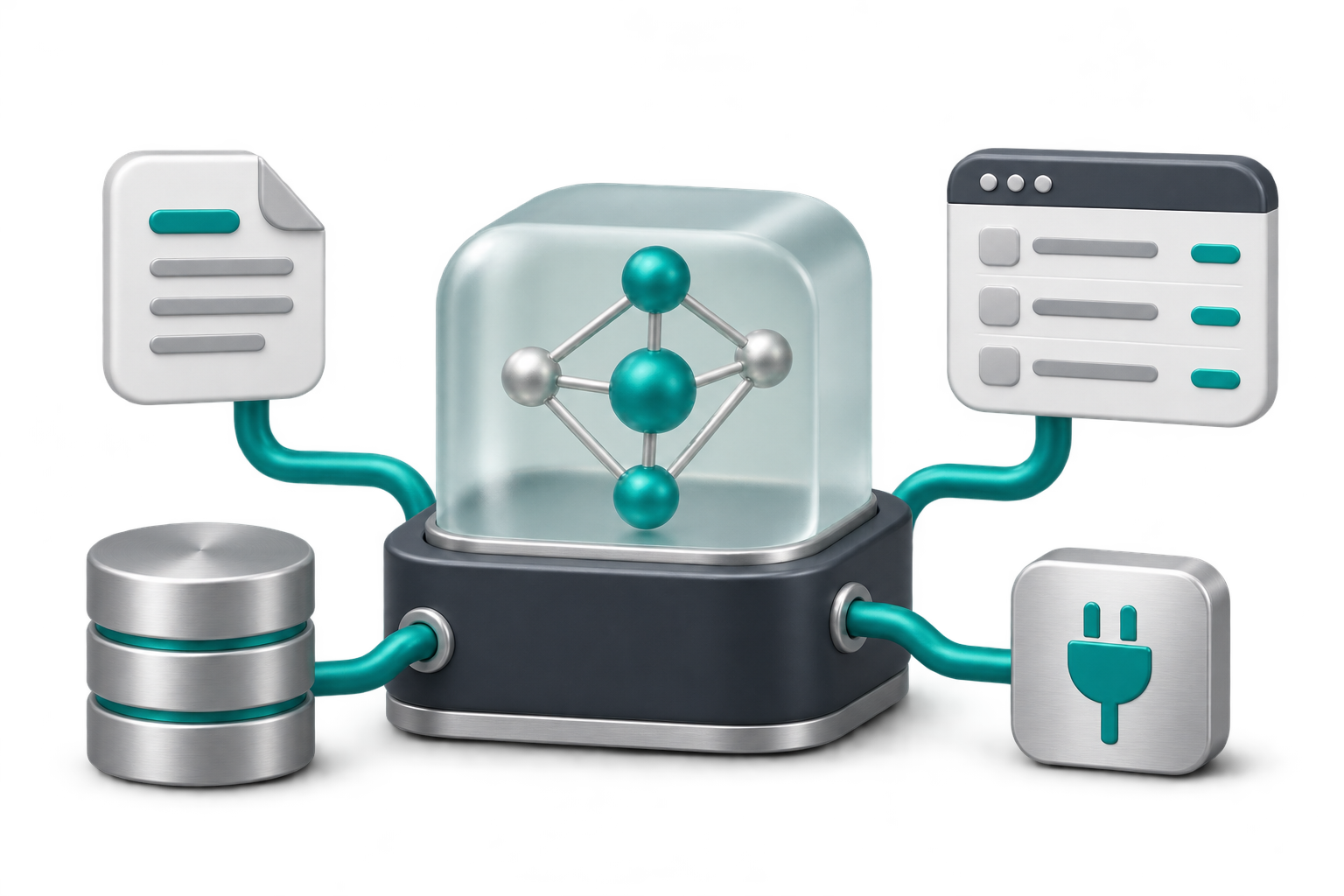
AI agent connecting business documents, databases, and workflow tools.

Why Choose Macromodule for AI Agent Development?

An agent needs a clear task, useful information, reliable integrations, and limits on the actions it can take.

We design the workflow and surrounding software together, so you can evaluate the result, understand its operating costs, and decide where human involvement is needed.

Business-Task Design

Business-Task Design

We define the task, current process, expected outcome, and exceptions before selecting an agent approach. Success criteria connect the implementation to the work your team needs completed.

Connected Business Systems

Connected Business Systems

We integrate approved APIs, databases, document sources, and applications so agents can work with the information and tools your process requires.

Controlled Agent Actions

Controlled Agent Actions

We implement access checks, scoped tool permissions, and approval steps around sensitive actions. Controls are enforced in application logic and integration boundaries, rather than relying on prompts alone.

Workflow-Based Evaluation

Workflow-Based Evaluation

We test representative tasks, edge cases, and failure scenarios against agreed criteria. Evaluation considers task completion, incorrect actions, response quality, latency, and cost.

Production Visibility

Production Visibility

We build appropriate traces, logs, alerts, and usage monitoring into the agreed deployment. Your team can investigate failures and see where human intervention is needed.

Maintainable Delivery

Maintainable Delivery

We document integrations, configuration, evaluation cases, and operating procedures. Your team receives a practical handover and an agreed path for updates and support.

Our AI Agent Development Services

Start with a focused workflow, extend an existing AI product, or introduce agent capabilities into your business software. Each engagement defines what the agent may access, what it may do, and how its behavior will be evaluated.
01

Custom AI Agent Development

Build task-focused agents that interpret requests, retrieve relevant context, use approved tools, and return or act on structured results. We define task boundaries, application logic, state handling, and escalation paths around your business process. Outcome: A scoped agent application with clear responsibilities and measurable acceptance criteria.
02

Knowledge Agents & Retrieval

Develop assistants that find and use information from approved documents, knowledge bases, and business data. The implementation can include retrieval-augmented generation, source references, access-aware retrieval, and content update workflows. Outcome: A knowledge experience evaluated against representative questions and the information each user is permitted to access.
03

Document Processing Agents

Connect document intake, extraction, validation, classification, and exception handling in one workflow. Use structured checks around required fields and route uncertain or conflicting results for human review. Outcome: A document workflow that combines model output with business rules and visible handling of exceptions.
04

Business System & Tool Integration

Connect agent applications to CRM platforms, help desks, databases, internal APIs, and other approved tools. Where suitable, we implement Model Context Protocol integrations alongside authenticated APIs, scoped permissions, and tool input validation. Outcome: Controlled access to the systems needed to complete the agreed task.
05

Agentic Workflow Automation

Build multi-step workflows combining model reasoning, deterministic business logic, tool calls, and human approval. Use a single agent or coordinated agents where the task justifies it, with retry limits, state tracking, and duplicate-action protection. Outcome: A traceable workflow with defined action boundaries and recovery behavior.
06

Agent Evaluation, Deployment & Support

Evaluate agent behavior, integrate release checks, and prepare the agreed hosting, monitoring, and operating procedures. Follow-up work can address changes to models, tools, prompts, data sources, and business requirements. Outcome: A deployment supported by evaluation evidence, operational visibility, and a defined improvement process.

AI Agent Architecture for Real Business Workflows

We design the application around the agent so data access, business rules, tool use, and operational controls work together.

Your agent solution can include:
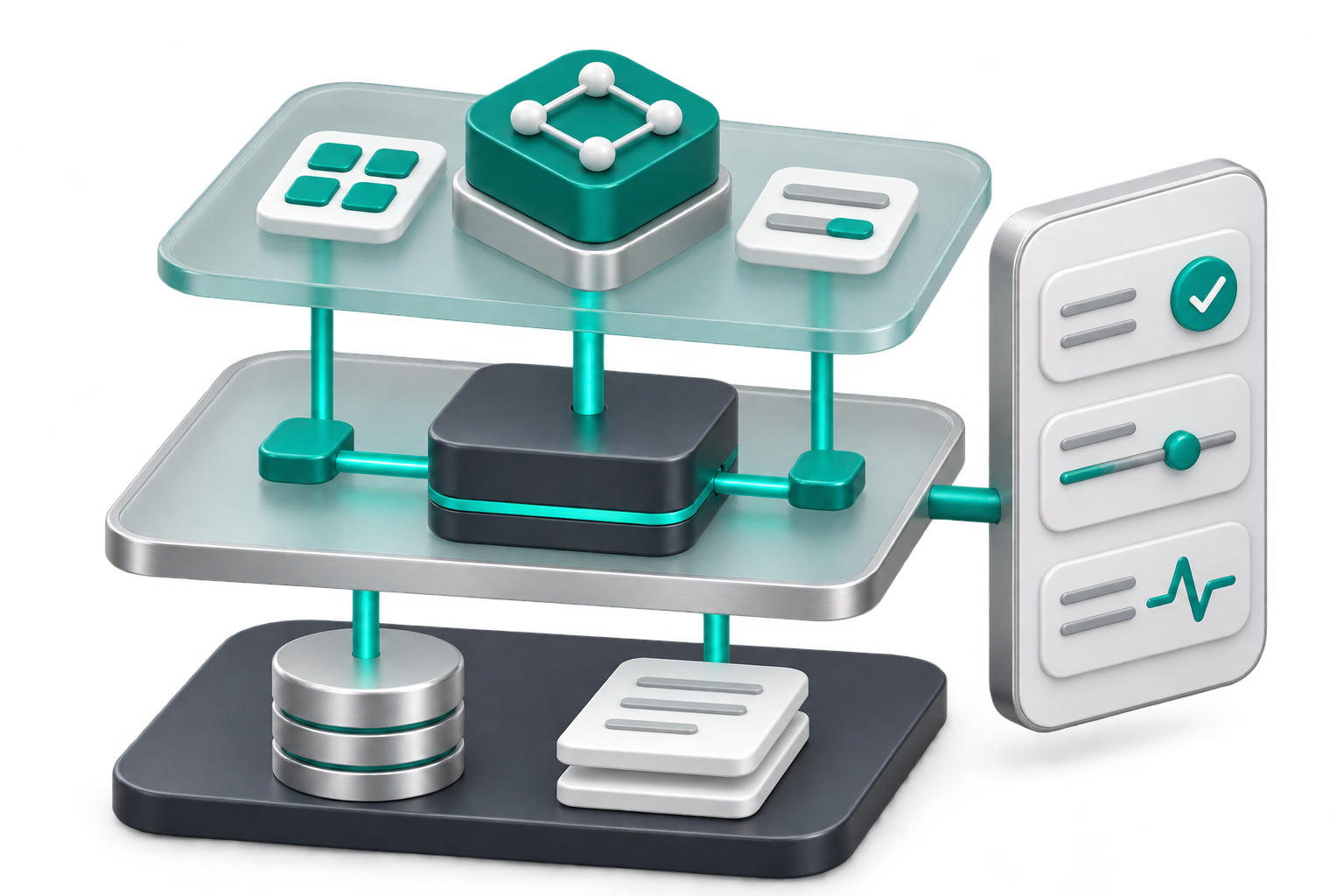
Approved Knowledge & Context: Document retrieval, business data, conversation context, and task state scoped to the user and workflow.
Authenticated Tools & Integrations: Validated API and tool calls with explicit permissions, input checks, and controlled credentials.
Workflow & State Management: Task routing, structured outputs, business-rule checks, retry limits, and duplicate-action protection.
Human Approval & Escalation: Review steps for sensitive actions, unclear requests, failed validations, and exceptions the agent cannot resolve.
Evaluation & Release Checks: Representative tasks and failure cases used to compare versions against agreed acceptance criteria.
Monitoring & Operating Procedures: Tool-call traces, error visibility, cost tracking, and documented ways to pause the agent or revoke access.
Layered AI agent architecture connecting data, orchestration, and monitoring.

From Workflow Discovery to Controlled Deployment

Our AI agent development process connects business requirements, a focused prototype, evaluation, and production integration. Scope and estimates account for agent-assisted engineering, alongside the integration, testing, and operating work the application needs.
01

Workflow Discovery

Map the current process, users, systems, task volume, exceptions, and desired outcome. Establish a baseline and decide whether agent reasoning is appropriate.

02

Architecture & Permissions

Define data sources, tool access, business rules, approval steps, hosting constraints, and evaluation criteria. Agree which actions the agent may take.

03

Focused Prototype

Build a limited workflow using representative tasks and suitable test data. Check feasibility, integration constraints, response quality, and indicative operating costs.

04

Evaluation & Hardening

Test task completion, retrieval quality, tool use, permission boundaries, adversarial inputs, and failure handling. Investigate errors and document remaining limitations.

05

Integration & Controlled Rollout

Connect approved production systems and introduce the agent to a defined user group or workload. Configure access, monitoring, escalation, and pause procedures.

06

Handover & Improvement

Deliver the agreed documentation, configuration, evaluation cases, and operating guidance. Ongoing support can monitor performance and evaluate changes before release.

Featured Case Studies & Proof of Work

Explore how we architect, engineer, and deploy high-availability enterprise systems for real-world production environments.
Group 1597884228
Custom Software Solutions

Sequoia Wireless

Telecom customers faced a slow and complicated enrollment process for LifeLine wireless services.

ZAH
Blockchain

ZAH

Users needed an accessible way to purchase and send digital gift cards using cryptocurrency.

Learn Spot
Custom Software Solutions

Learn Spot

Educators needed one cloud platform to create courses and monitor student learning.

Where AI Agents Can Help

Focus on tasks with a clear owner, usable information, and an outcome that can be evaluated. These examples illustrate potential workflows; the appropriate design is established during discovery.
Engineered for High-Compliance Sectors
01
01

Customer Support & Service Operations

Classify incoming requests, retrieve approved answers, draft responses, and create or update support tickets. Escalate sensitive cases, missing information, and actions that need approval.

02
02

Documents & Operational Intake

Extract fields from submitted documents, check required information, identify inconsistencies, and prepare structured records for review before updates or submissions.

03
03

Sales & Account Operations

Summarize account information, prepare CRM updates, research approved sources, and draft follow-up tasks. Keep external communication and record changes within defined approval rules.

04
04

Internal Knowledge & Business Tools

Help employees find relevant policies, procedures, and project information. Connect answers to permitted sources and approved tools while respecting each user’s access.

05
05

Finance, Healthcare & Other Sensitive Workflows

Assist with administrative document handling, record preparation, and exception routing. Scope privacy requirements, permissions, human review, and specialist obligations before deployment.

Keep Control of What Your Agent Can Do

An agent may read business data, call external tools, or change records. We build the relevant controls into the application and integrations, with clear ownership of the actions involved.

Permissions, approval decisions, and operating procedures are defined around your workflow before a production rollout.
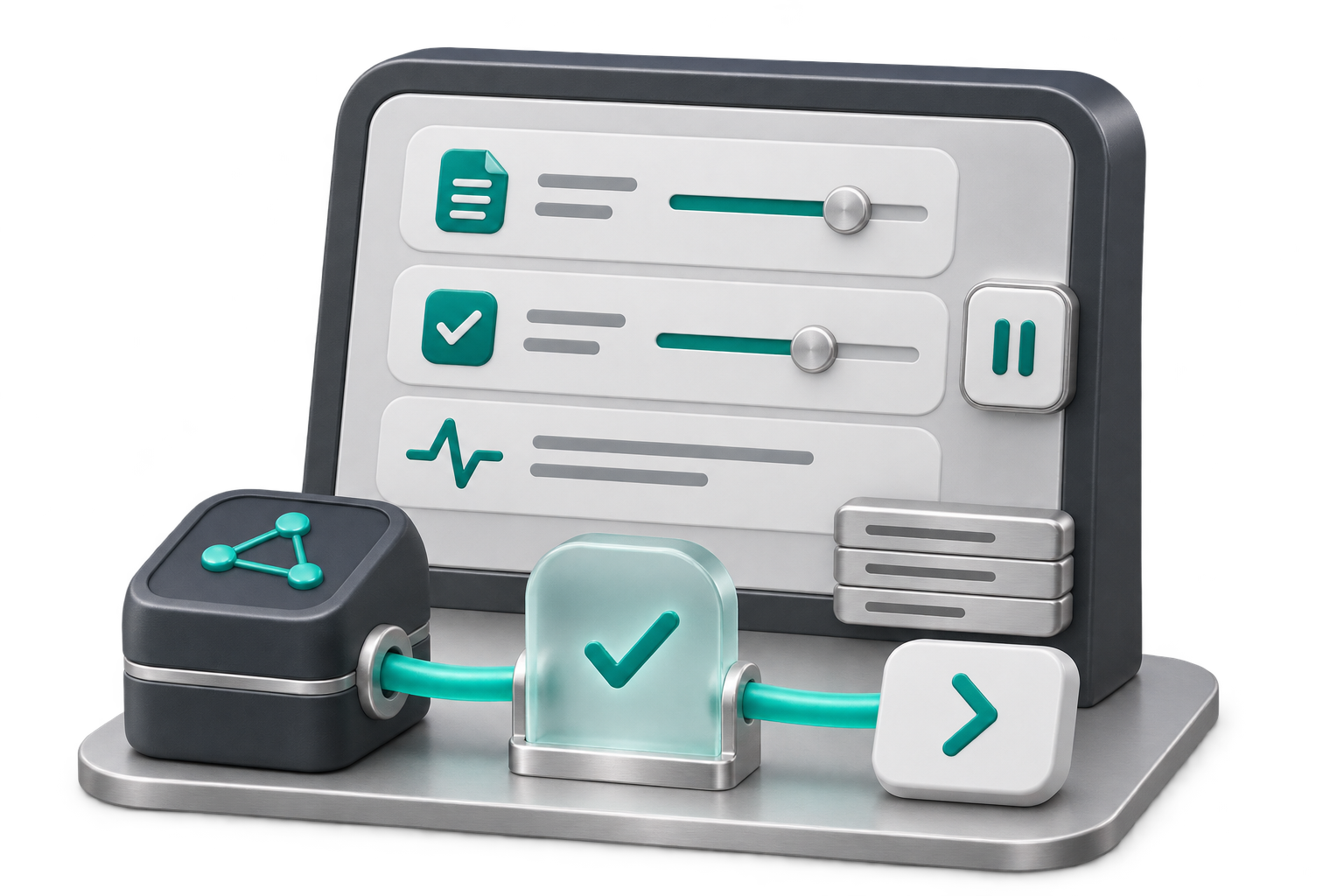
Permissions, Approvals & Operational Control

Enforce Access Boundaries: Authenticate users and tools, limit credentials, and apply permissions when retrieving information or executing actions.
Approve Sensitive Actions: Bind approval to the specific proposed action and its relevant details before the application carries it out.
Validate Tool Calls: Check inputs and outputs, apply business rules, and define which actions may be retried without creating duplicate changes.
Trace Failures & Exceptions: Record relevant task steps, tool calls, errors, and approvals while limiting sensitive information in logs.
Pause, Escalate & Recover: Provide documented controls to stop agent activity, revoke access, and route unresolved work to a responsible person.
AI agent controls showing permissions, action approval, monitoring, and pause functionality.

Business Benefits of AI Agent Development

01
AI agent development benefit

Reduce Repetitive Handling: Automate suitable information gathering, classification, and record-preparation tasks.

02
AI agent development benefit

Connect Fragmented Workflows: Bring approved knowledge and business tools into one task flow.

03
AI agent development benefit

Make Exceptions Visible: Route uncertainty, validation failures, and approval requests to the right people.

04
AI agent development benefit

Measure Task Outcomes: Compare completion, error rates, intervention, latency, and cost against an agreed baseline.

05
AI agent development benefit

Preserve Operational Control: Define action permissions, escalation paths, and pause procedures.

06
AI agent development benefit

Improve Through Evaluation: Test changes against representative cases before expanding the workflow.

Frequently Asked Questions

Answers about agent capabilities, integrations, permissions, evaluation, project scope, and ongoing operation.

AI agent development combines a language model with relevant information, approved tools, and application logic so it can work toward a defined task. The implementation may include retrieval, task state, API calls, business-rule validation, human review, and monitoring. The scope defines what the agent can access and which actions it may take.

A chatbot primarily supports a conversation. An agent can also use tools and carry out steps in a business process, such as retrieving records, preparing a structured update, or creating an approved task. Conversational interfaces and agents can be combined, depending on the application.

No. Fixed rules, standard integrations, or a simpler model call may solve the problem more predictably. During discovery, we assess where variable inputs or task decisions justify agent reasoning and where deterministic application logic should control the workflow.

Yes, where the required systems expose suitable APIs, data access, or other supported integration methods. We assess authentication, permissions, rate limits, data formats, and restrictions before confirming scope. An integration may require additional work in the existing application or approval from its administrator.

Yes. Approval steps can be built around actions such as sending external messages, changing important records, or initiating sensitive workflows. The application should bind approval to the specific action and relevant details, then validate permissions before execution. Approval behavior is agreed during design.

We agree on approved data sources, access permissions, hosting, model providers, and processing requirements before implementation. Requirements for retention, external processing, redaction, and logging are reviewed against the selected services and configuration. Do not assume a particular training or retention policy applies without checking the agreed provider terms.

We define representative tasks and expected outcomes, then evaluate completion, output quality, tool use, access boundaries, failure handling, latency, and cost. Testing can include misleading inputs, unavailable tools, incomplete data, and attempted instruction injection. Results guide changes and the decision to expand beyond a limited rollout.

Yes. A focused prototype can test one workflow, limited integrations, representative cases, and indicative operating costs. It helps establish feasibility and remaining requirements before a production build. Production controls, broader integrations, monitoring, and operating procedures are scoped explicitly.

Yes. We can assess the existing code, prompts, integrations, retrieval setup, evaluation cases, and operating behavior. Findings help define work such as correcting tool calls, improving data access, adding permission checks, strengthening failure handling, or preparing deployment and monitoring.

Only if the workflow justifies them. A single agent with well-defined tools may be sufficient. Coordinated agents add state, communication, testing, and operating complexity, so we use that approach when separate responsibilities provide a practical benefit that can be evaluated.

Cost depends on workflow complexity, integrations, data preparation, permission requirements, evaluation depth, hosting, and production support. Our estimates account for agent-assisted development efficiencies and the remaining engineering work. Model usage, third-party tools, hosting, and ongoing support are identified separately so you can assess total operating cost.

The schedule depends on access readiness, integration complexity, data quality, approval requirements, and the acceptance criteria. We confirm the timeline after discovery and may propose a focused prototype before a production implementation. Integration, evaluation, and rollout work are included in planning.

Deliverables are defined in the agreement and can include application source code, integration configuration, prompts, workflow definitions, evaluation cases and results, deployment guidance, and operating documentation. Ownership, third-party licenses, service accounts, and any usage restrictions are agreed before development.

Ongoing support can cover error investigation, tool and API changes, evaluation updates, cost monitoring, and improvements to the agreed workflow. Support hours, response expectations, system responsibilities, and recurring charges are defined separately. Material changes to models, prompts, or integrations should be evaluated before release.

Let's Build Your Next Digital Product

Whether you are launching a new platform, modernizing legacy systems, or expanding engineering capacity, Macromodule Technologies helps you move forward with clarity and confidence. We support you across product discovery, technical architecture, UI/UX design, software development, quality assurance, cloud deployment, and continuous improvement. By understanding your core business goals early, we define a clear, risk-free delivery roadmap before writing a single line of code.

From AI-powered platforms and custom enterprise software to blockchain systems, mobile applications, cloud infrastructure, and data-intensive products, we engineer secure, scalable solutions built around your operational strategy. Our focus isn't just on launching—we build a flexible technical foundation that evolves as your users, data, and business requirements grow.

Partner with an engineering team that takes complete ownership, communicates transparently, and stays laser-focused on delivering measurable, long-term value.

Discuss Your Project

Our Offices:

Head Office<span class="gradient-text"> (USA) </span>

Head Office (USA)

Address: 28 W Flagler St Ste 300B #324 Miami, FL 33130

Phone: +1 (321) 364-6867

Email: consultant@macromodule.com

Regional Office<span class="gradient-text"> (UAE) </span>

Regional Office (UAE)

Address: Business Centre, Sharjah, United Arab Emirates

Phone: +971 55 154 7284

Email: consultant@macromodule.com

Innovation Hub <span class="gradient-text"> (Pakistan) </span>

Innovation Hub (Pakistan)

Address: 61 C, Pia Housing Scheme, Lahore 54000

Phone: +92 (339) 0134700

Email: consultant@macromodule.com