IT Strategy & Consultancy for Better Technology Decisions

Decide what to build, what to improve, and where to invest before committing your budget.

Macromodule provides IT strategy and consulting services for founders and leadership teams planning new products, modernizing systems, evaluating AI, or resolving delivery challenges. Led by Founder & CEO Muhammad Usman Zia, our strategic engagements connect business priorities with practical architecture, realistic investment planning, and clear delivery responsibilities.

Technology roadmaps · Architecture decisions · Fractional CTO advisory
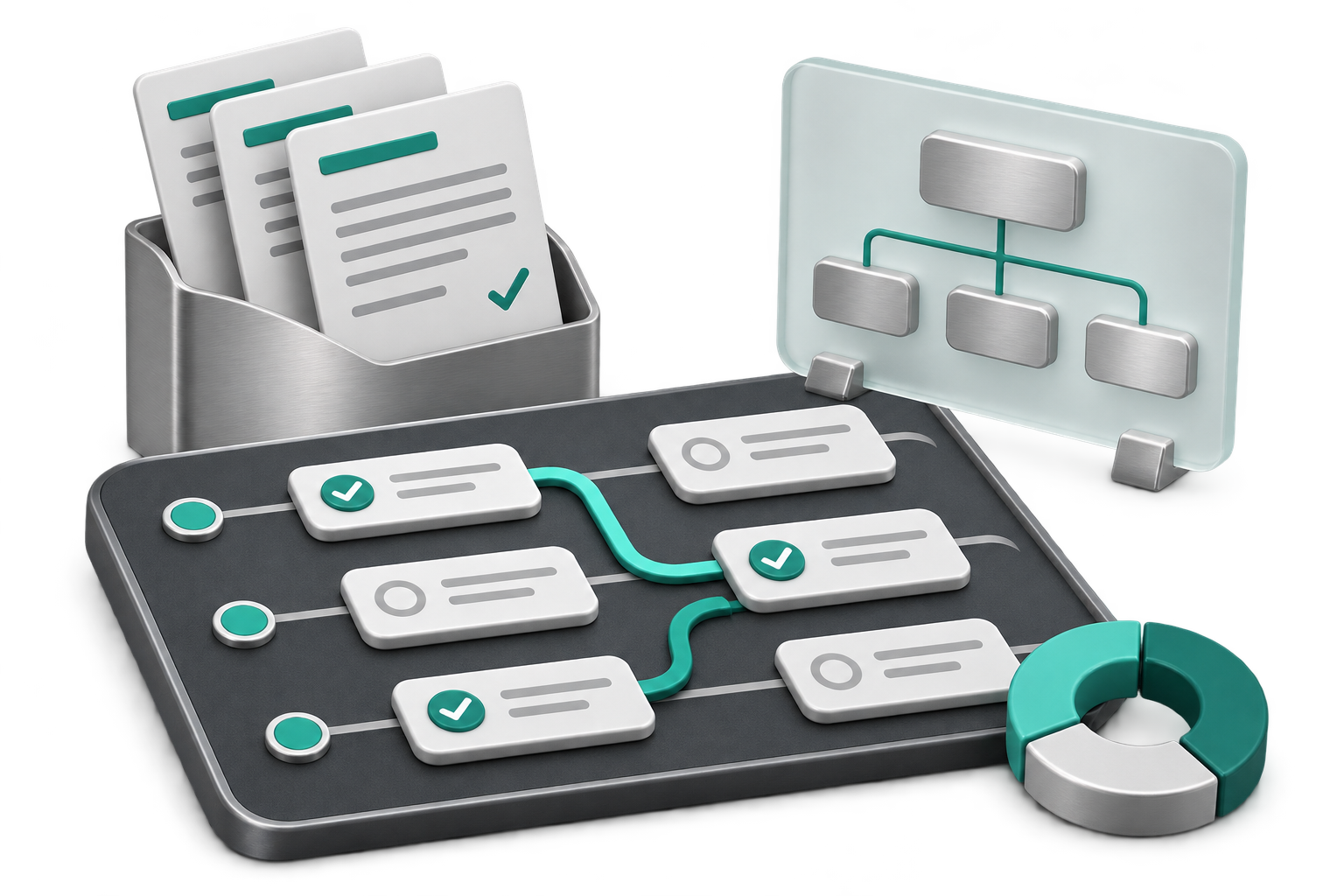
Technology architecture model with decision cards, a compass, and a phased roadmap.

Why Choose Macromodule for IT Consultancy?

A technology decision should explain how it helps the business, what it will require, and who will own the result.

We bring product, architecture, and delivery considerations into the same conversation. You receive recommendations that account for your existing systems, available people, budget, and operational needs.

Founder-Level Accountability

Muhammad Usman Zia leads strategic engagements, with his involvement defined around the decisions you need to make. Technical specialists contribute where deeper investigation is required.

Business Priorities First

Start with the revenue, customer, efficiency, or operational problem behind the request. Agree what success means before choosing software, infrastructure, or an automation approach.

Clear Options & Tradeoffs

Compare the cost, delivery effort, dependencies, risks, and ongoing ownership of credible alternatives. Understand when to retain an existing system, buy a product, integrate services, or build.

Advice Informed by Delivery

Consider implementation constraints while shaping the recommendation. Architecture, testing, deployment, support, and handover requirements influence the plan from the beginning.

A Written Decision & Roadmap

Turn discussions into a documented recommendation, prioritized initiatives, decision owners, and next steps. Separate immediate actions from work that depends on further evidence.

A Plan Your Team Can Use

Use the agreed outputs with your internal engineers, an existing vendor, or Macromodule. Implementation requirements and any Macromodule delivery proposal are identified separately.

Our IT Strategy & Consulting Services

Start with the decision in front of you. We scope the review, involve the relevant stakeholders, and agree what evidence and written outputs will help you move forward.
01

IT Strategy & Technology Roadmaps

Assess your current systems, business priorities, delivery capacity, and upcoming commitments. Define which technology initiatives deserve attention, how they depend on each other, and what resources they require. Your roadmap includes phased priorities, ownership, success measures, and budget assumptions so leadership can decide what to fund next.
02

Architecture Review & Build-vs-Buy Decisions

Evaluate a product plan or existing architecture against functionality, integrations, data flows, access requirements, scale, and maintainability. Compare custom development, commercial software, and integration options. Receive an options assessment and recommended direction with the reasoning, dependencies, and questions that need validation before commitment.
03

AI & Automation Feasibility

Identify where AI or workflow automation could improve a specific business process. Assess data availability, exception handling, human review, integration requirements, operating costs, and evaluation criteria. Receive a prioritized opportunity assessment and a practical validation plan, including cases where a simpler workflow change is more suitable.
04

Modernization, Cloud & Integration Strategy

Plan how to improve aging applications, fragmented systems, or a changing cloud environment. Assess dependencies, data movement, migration constraints, operating responsibilities, and the effort required to maintain the target setup. Receive a phased modernization plan with sequencing, validation requirements, and transition risks.
05

Delivery Recovery & Technical Due Diligence

Review a delayed project, inherited product, or proposed technology commitment. Examine the agreed requirements, architecture evidence, delivery progress, ownership, and unresolved issues available within scope. Receive a findings summary and a recovery or decision plan that distinguishes confirmed problems, open questions, and recommended next actions.
06

Fractional CTO & Technology Leadership

Add ongoing technology direction on a defined basis. Scope can include roadmap reviews, architecture decisions, vendor evaluation, engineering priorities, delivery oversight, and leadership reporting. Agree the decision authority, involvement cadence, and escalation route so advisory input translates into accountable action.

A Technology Strategy Your Team Can Execute

Get a written basis for the next investment decision and a practical route from recommendation to implementation.

Your agreed consulting deliverables can include:
Current-State Assessment: A summary of the systems, workflows, stakeholders, constraints, and technical issues reviewed, with evidence sources and remaining questions.
Options & Recommended Direction: A comparison of viable approaches, including delivery effort, operating implications, dependencies, and the reasoning behind the recommendation.
Target Architecture & Requirements: The agreed system boundaries, integration approach, data responsibilities, and requirements that implementation must address.
Prioritized Technology Roadmap: Phased initiatives with dependencies, milestones, decision points, and accountable owners rather than an unsequenced feature list.
Budget & Resource Assumptions: Planning ranges for delivery, infrastructure, third-party tools, and ongoing ownership, with assumptions that affect cost and timing.
Risk Register & Executive Decision Brief: Key risks, validation actions, success measures, and the decisions leadership needs to approve before the next phase.
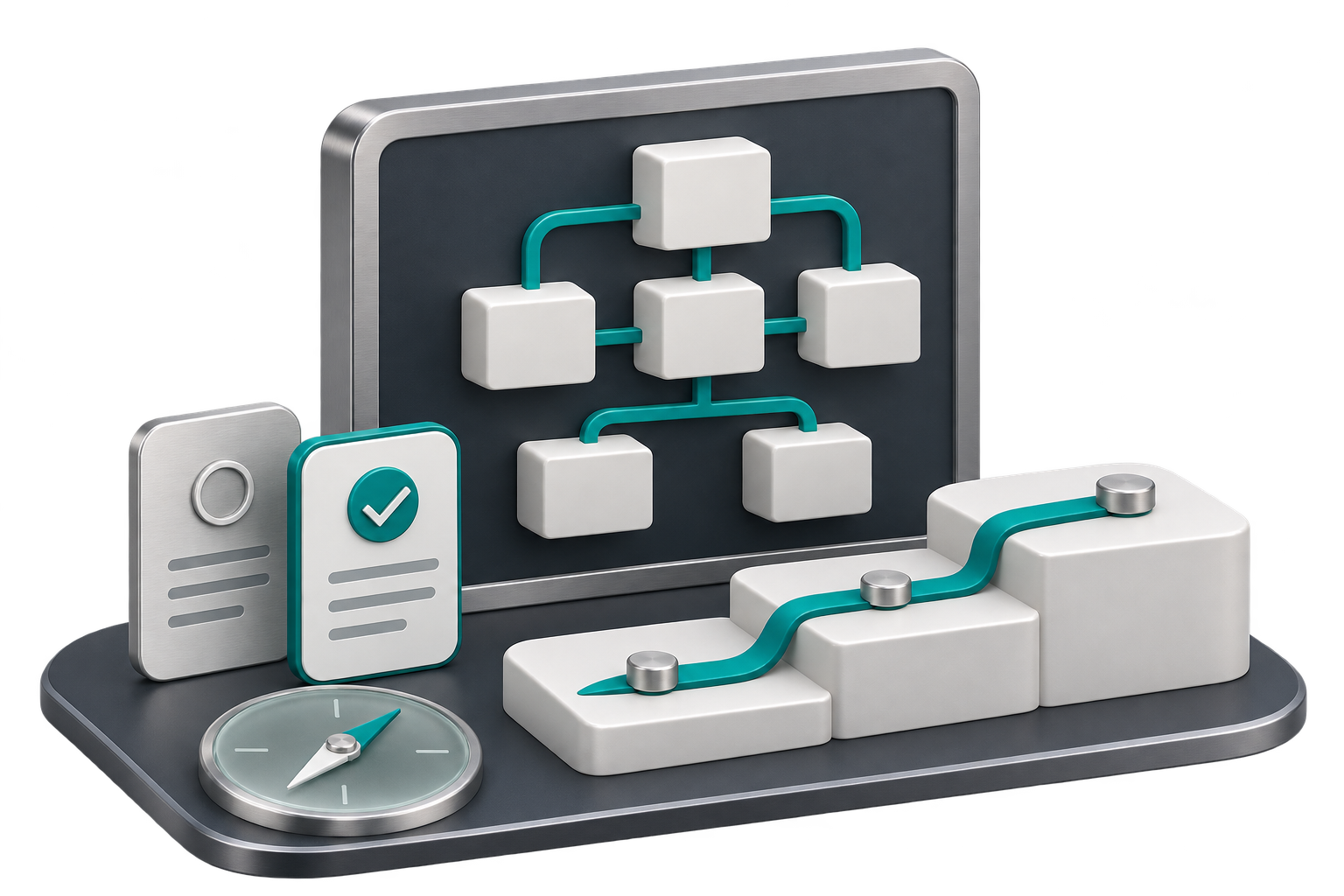
Technology roadmap with assessment documents, architecture plans, resource allocation, and decision checkpoints.

Our IT Consulting Process

Each engagement moves from a clearly defined business question to reviewed evidence, a documented recommendation, and agreed next actions.
01

Define the Decision

Clarify the business objective, stakeholders, constraints, and decisions the engagement needs to support. Agree the review boundaries, required access, deliverables, and success criteria.

02

Review the Current Position

Discuss relevant workflows with stakeholders and examine the available plans, architecture, systems, delivery records, and operating information. Record evidence gaps that could change the recommendation.

03

Compare Practical Options

Evaluate credible approaches against business value, delivery effort, dependencies, technical risk, ongoing cost, and ownership. Use focused technical investigation where a major assumption needs checking.

04

Build the Roadmap

Translate the recommended direction into phased actions, responsibilities, decision points, and planning estimates. Account for suitable AI-assisted development and automation alongside review, testing, integration, and operational work.

05

Review With Leadership

Walk through the findings and tradeoffs with the people responsible for funding and execution. Resolve questions, record decisions, and agree what needs further validation before commitment.

06

Support the Next Steps

Hand over the agreed documents and decision record. Where included, continue through advisory check-ins, implementation reviews, or fractional technology leadership with a defined cadence and scope.

Featured Case Studies & Proof of Work

Explore how we architect, engineer, and deploy high-availability enterprise systems for real-world production environments.
Hand and iPhone 16 Pro 1
Blockchain

Tajir Wallet

Users faced high transaction latency, custodial security vulnerabilities, and fragmented interfaces when managing digital assets across disparate EVM and non-EVM blockchains.

React Native Rust Web3.js EVM
Go-To App
Cloud Services

Go-To App

Customers need a clearer way to explore local service providers and understand the professional information available when choosing whom to contact.

Factor
Blockchain

Factor

DeFi users needed a clearer way to configure strategies and follow their on-chain actions.

When IT Strategy & Consultancy Helps

For founders and leadership teams facing a technology decision with consequences for investment, delivery, customers, or operations.
Engineered for High-Compliance Sectors
01
01

Founders Planning a New Product

You need to define the first useful release, evaluate technical options, and understand delivery and operating costs before funding a build. Establish a clear scope and a credible plan.

02
02

Businesses Modernizing Existing Systems

Your operations rely on disconnected tools, manual processes, or an application that is increasingly difficult to change. Prioritize improvements and plan the transition around business continuity.

03
03

Teams Evaluating AI & Automation

You have possible use cases but need to decide which are worth validating. Assess data, integrations, costs, human review, and measurable value before moving beyond an experiment.

04
04

Owners of Delayed or Inherited Projects

A project is behind, requirements are unclear, or a new team is taking over. Establish what has been delivered, what remains uncertain, and how to regain control of the next phase.

05
05

Growing Companies Needing Technology Leadership

The business needs help with architecture, vendor decisions, engineering priorities, and delivery oversight. Define a fractional leadership arrangement around the decisions and responsibilities involved.

Founder-Led Advice. Clear Execution Priorities.

Muhammad Usman Zia, Founder & CEO of Macromodule Technologies, leads our strategic consulting engagements. His background spans software delivery, engineering leadership, product planning, and company building.

He works with founders and executives to connect a business decision with the architecture, delivery plan, and ownership needed to carry it through. Macromodule specialists contribute to the technical areas included in the engagement.

Explore Usman’s professional background and technology advisory work.
What Founder Involvement Means for Your Engagement

A Defined Leadership Role: Agree which workshops, decision reviews, and executive discussions Usman will lead, along with the contribution expected from technical specialists.
Direct Discussion of Tradeoffs: Review competing priorities, implementation constraints, and investment assumptions with the people responsible for the business outcome.
Written Recommendations: Receive the agreed findings, decisions, and next actions in a form your leadership team and implementation partners can use.
Delivery Responsibilities Made Clear: Identify who approves priorities, who implements changes, and how progress and unresolved issues are reported.
Follow-Through That Fits the Need: Choose a focused consultation, a structured assessment, or ongoing advisory support. Engineering implementation is scoped separately when required.
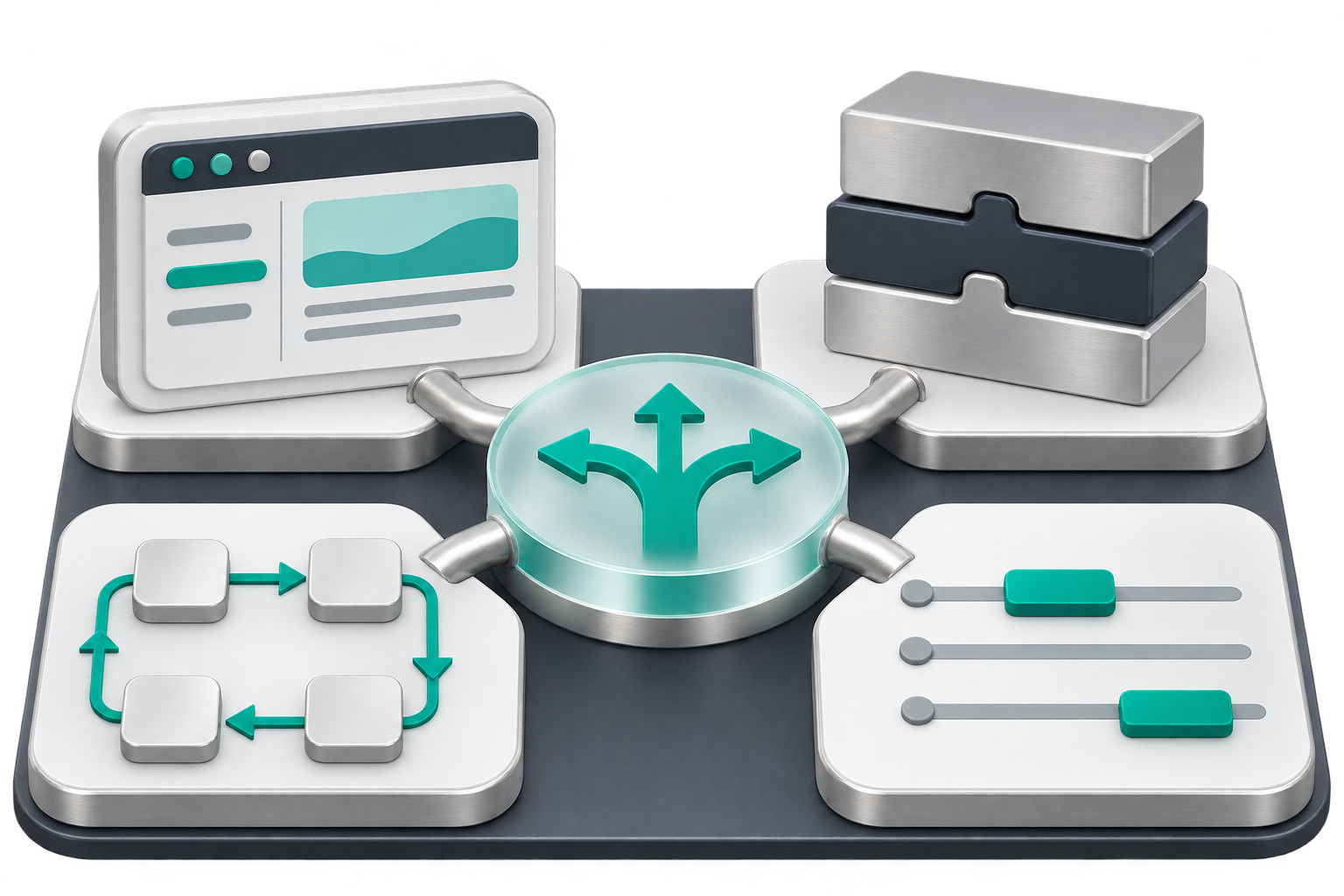
Connected application, business system, automation, and project planning modules representing IT consulting use cases.

Benefits of Practical IT Strategy

01

Make Better Investment Decisions: Compare viable approaches before committing to a major build, migration, or software purchase.

02

Set Clear Priorities: Sequence initiatives around business value, dependencies, resources, and the capacity to deliver.

03

Expose Assumptions Early: Identify evidence gaps, integration constraints, and operating requirements that affect the plan.

04

Connect Business & Engineering: Give stakeholders a shared explanation of the recommended direction and its tradeoffs.

05

Plan for Ongoing Ownership: Account for support, infrastructure, access, documentation, and maintenance from the start.

06

Move From Discussion to Action: Leave with documented decisions, accountable owners, and agreed next steps.

Frequently Asked Questions

Answers about IT strategy, technology assessments, founder involvement, fractional CTO support, deliverables, and implementation.

IT strategy and consulting services help a business decide how technology should support its priorities. An engagement can assess existing systems, compare options, plan investment, and define the next delivery phase. At Macromodule, the scope can include product direction, architecture, AI feasibility, modernization, project recovery, or ongoing technology leadership.

The service suits founders planning a product, established businesses improving their systems, teams evaluating AI, and owners of delayed or inherited projects. It also fits companies that need experienced technology direction on a defined basis. The starting point is a business decision or delivery problem that needs a clear technical plan.

Muhammad Usman Zia leads strategic consulting engagements as Founder & CEO of Macromodule Technologies. We define his involvement in the engagement scope, including the discussions, workshops, and decision reviews he will lead. Technical specialists contribute where the review requires deeper investigation, and ongoing availability is agreed as part of the engagement.

The agreed outputs can include an assessment, options comparison, architecture recommendations, a prioritized roadmap, budget assumptions, a risk register, and an executive decision brief. A focused consultation may produce a shorter written recommendation. We confirm the deliverables and review boundaries before starting so the output matches the decision you need to make.

Yes. We compare business fit, integration requirements, implementation effort, licensing, data access, ongoing cost, and the ability to change the solution later. Options can include retaining the current setup, purchasing software, connecting existing tools, or developing a custom application. The recommendation explains the assumptions and tradeoffs behind the preferred direction.

Yes. We start with a specific workflow and the outcome you want to improve. The assessment considers data readiness, integration effort, exceptions, human review, evaluation methods, and operating cost. The output can recommend a focused validation exercise, a conventional automation approach, or further preparation before investment.

We can review architecture, system boundaries, integrations, dependencies, and technical documentation as part of a strategy engagement. Detailed source-code investigation, security testing, performance testing, and production-readiness verification require a defined technical review scope. We identify when the strategic decision depends on that additional evidence.

Yes. We can assess the intended scope, available implementation, delivery records, unresolved issues, and ownership. The findings help establish what should be completed, changed, investigated, or deferred. A recovery plan defines priorities and acceptance criteria; its timing and estimates depend on the evidence available and any further technical review needed.

Fractional CTO support provides technology leadership on an agreed basis. Responsibilities can include architecture decisions, roadmap planning, vendor review, engineering priorities, delivery oversight, and executive reporting. We define involvement, decision authority, reporting cadence, and escalation routes. The arrangement is shaped around the leadership responsibilities your business needs covered.

Planning estimates account for scope, system dependencies, integration work, data migration, testing, release requirements, and ongoing operation. We consider suitable AI-assisted development and automation when estimating effort, together with the review and validation they require. Assumptions and uncertainty are documented, and estimates are refined as requirements and technical evidence improve.

You can use the agreed strategy outputs with your own team, an existing supplier, or Macromodule. If we propose implementation, its scope, pricing, assumptions, and responsibilities are set out separately. The consulting recommendation should explain why an approach fits the business and what the chosen implementation team will need to deliver.

Yes. We can involve the relevant team in discovery, architecture discussions, delivery reviews, and handover. Access, communication routes, responsibilities, and decision authority are agreed at the start. This helps align the recommendation with the people who maintain the system and carry out the next phase.

The fee depends on the decision, number of systems and stakeholders, technical investigation required, workshops, written outputs, and ongoing involvement. A focused consultation differs from a wider strategy assessment or fractional leadership arrangement. We provide a proposal with scope, assumptions, deliverables, and fees after discussing your needs.

Timing depends on the breadth of the review, access to relevant evidence, stakeholder availability, and whether technical validation is required. We agree a delivery sequence and review schedule after the initial discussion. Ongoing advisory or fractional leadership engagements follow a defined cadence rather than a single completion date.

Start with the business objective, the decision you are facing, existing system information, budget constraints, and any important deadlines. Product plans, architecture notes, delivery reports, or a list of unresolved questions can help. Sensitive access and confidential material are handled through the process agreed for the engagement.

Let's Build Your Next Digital Product

Whether you are launching a new platform, modernizing legacy systems, or expanding engineering capacity, Macromodule Technologies helps you move forward with clarity and confidence. We support you across product discovery, technical architecture, UI/UX design, software development, quality assurance, cloud deployment, and continuous improvement. By understanding your core business goals early, we define a clear, risk-free delivery roadmap before writing a single line of code.

From AI-powered platforms and custom enterprise software to blockchain systems, mobile applications, cloud infrastructure, and data-intensive products, we engineer secure, scalable solutions built around your operational strategy. Our focus isn't just on launching—we build a flexible technical foundation that evolves as your users, data, and business requirements grow.

Partner with an engineering team that takes complete ownership, communicates transparently, and stays laser-focused on delivering measurable, long-term value.

Discuss Your Project

Our Offices:

Head Office<span class="gradient-text"> (USA) </span>

Head Office (USA)

Address: 28 W Flagler St Ste 300B #324 Miami, FL 33130

Phone: +1 (321) 364-6867

Email: consultant@macromodule.com

Regional Office<span class="gradient-text"> (UAE) </span>

Regional Office (UAE)

Address: Business Centre, Sharjah, United Arab Emirates

Phone: +971 55 154 7284

Email: consultant@macromodule.com

Innovation Hub <span class="gradient-text"> (Pakistan) </span>

Innovation Hub (Pakistan)

Address: 61 C, Pia Housing Scheme, Lahore 54000

Phone: +92 (339) 0134700

Email: consultant@macromodule.com