Cloud & DevOps Services for Reliable Software Delivery

Deploy, operate, and improve your applications with infrastructure and delivery workflows built around your product.

Macromodule provides cloud and DevOps services covering architecture, migration, CI/CD, infrastructure automation, access controls, monitoring, backups, and cost optimization. We help establish new environments and improve existing systems with clear release procedures, recovery plans, and operating responsibilities.

Cloud infrastructure · Deployment automation · Production operations
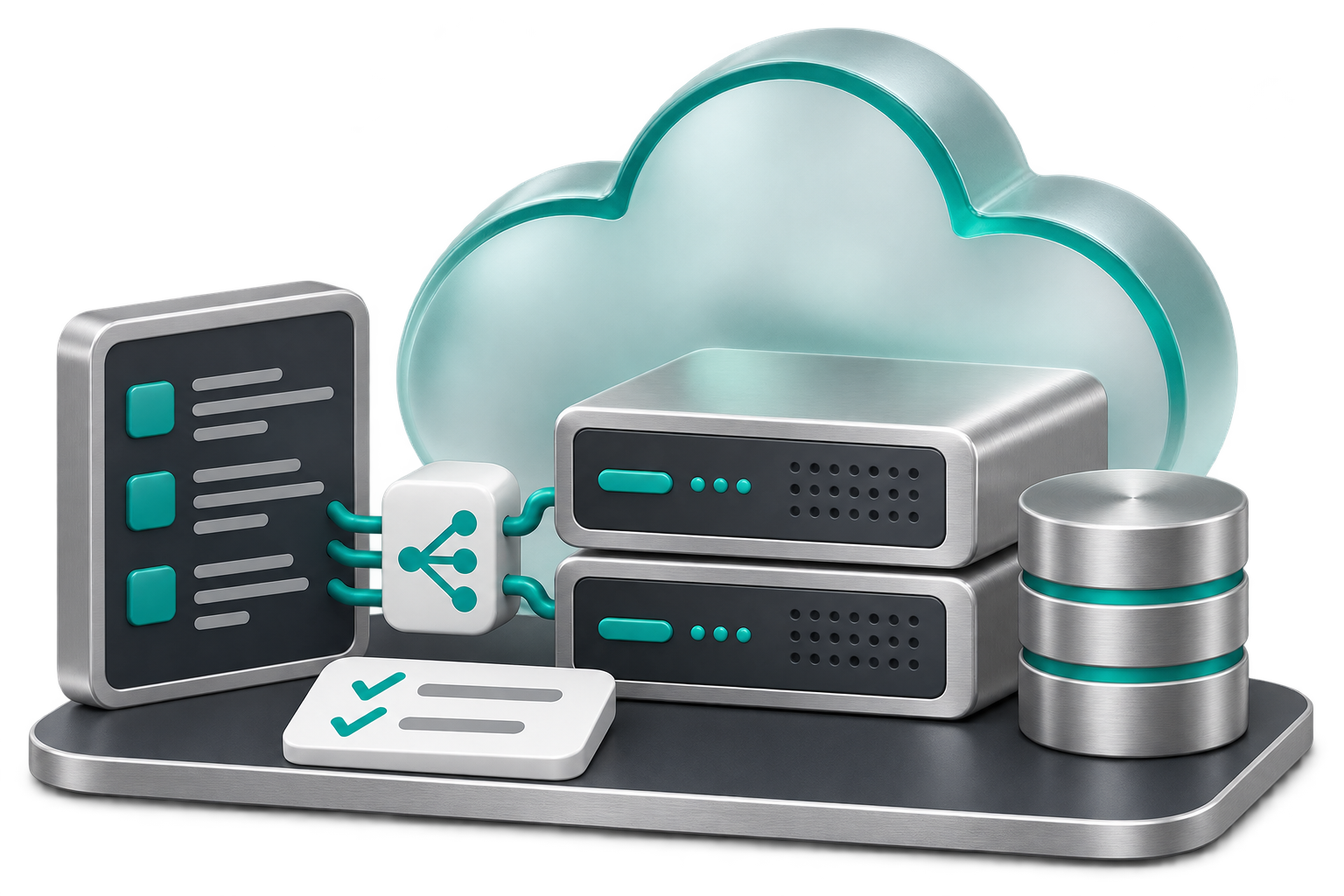
Cloud infrastructure showing servers, a database, configuration controls, and deployment checks.

Why Choose Macromodule for Cloud & DevOps?

Infrastructure decisions affect how your product releases changes, handles failures, controls access, and incurs operating costs.

We assess the application and its environment together, then define practical improvements based on workload requirements, team ownership, budget, and recovery needs.

Workload-First Architecture

Workload-First Architecture

Choose infrastructure around traffic, data, integrations, deployment frequency, and service dependencies. We explain tradeoffs between managed services, containers, and virtual servers before adding complexity.

Repeatable Releases

Repeatable Releases

Create build and deployment workflows with agreed checks, environment configuration, and approval steps. Document how releases are verified and how the team responds when deployment fails.

Controlled Access & Configuration

Controlled Access & Configuration

Define identities, permissions, network boundaries, and secrets handling around the systems involved. Separate environment access and review who can change production resources.

Operational Visibility

Operational Visibility

Connect relevant logs, metrics, health checks, and alerts to the people responsible for the application. Prioritize signals that help investigate user-impacting failures and operating constraints.

Recovery You Can Verify

Recovery You Can Verify

Plan backups and recovery around acceptable data loss and recovery time objectives. Include restoration checks and document the dependencies required to recover the agreed services.

Cost & Ownership Clarity

Cost & Ownership Clarity

Identify resource usage, billing drivers, account ownership, and support responsibilities. Infrastructure recommendations consider both provider charges and the effort needed to maintain the setup.

Our Cloud & DevOps Services

Start with an infrastructure assessment, a defined migration, deployment automation, or ongoing operational support. Each engagement identifies the systems in scope, access required, deliverables, and responsibilities.
01

Cloud Architecture & Migration

Plan and implement infrastructure for new applications or a move from an existing environment. We assess application dependencies, data transfer, networking, access, hosting options, and operating costs. Migration plans include validation, cutover, and recovery steps. Outcome: A documented environment or migration plan aligned with the application’s workload and business constraints.
02

CI/CD & Deployment Automation

Build pipelines that connect source changes, application checks, build artifacts, environment configuration, and deployments. Agree how releases are approved, validated, and traced, with an appropriate response to failed deployments and incompatible database changes. Outcome: A repeatable release workflow with defined checks and responsibilities.
03

Infrastructure as Code & Containers

Manage agreed infrastructure through version-controlled configuration and package applications in containers where suitable. Scope can include environment provisioning, configuration management, container registries, orchestration, and reproducible setup. Outcome: Infrastructure and application configuration your team can review, recreate, and maintain.
04

Cloud Security & Access Controls

Review and implement the agreed identity permissions, network access, secrets management, logging, and environment boundaries. Identify exposed resources and configuration gaps in context, and document remediation priorities. Outcome: Clearer access boundaries and configuration controls within the defined scope; specialist security testing is agreed separately.
05

Monitoring, Backups & Recovery

Configure relevant metrics, logs, health checks, alerts, and backup workflows for the systems in scope. Define retention, access, restoration procedures, and recovery objectives, then exercise agreed recovery scenarios. Outcome: Operational visibility and recovery arrangements supported by documented checks.
06

Cost Optimization & Managed DevOps

Assess spending, resource utilization, capacity, and operational effort to identify justified improvements. Ongoing support can cover monitoring review, maintenance, deployment assistance, incident investigation, and infrastructure changes. Outcome: A prioritized optimization plan and, where included, an explicitly defined support arrangement.

Cloud Foundations for Applications in Production

Connect infrastructure, software delivery, access, data, and operations in an architecture your team can understand and maintain.

Your cloud and DevOps setup can include:
Compute & Application Hosting: Managed services, virtual servers, or containers selected around workload behavior, availability needs, and maintenance effort.
Networking & Service Access: Agreed routing, DNS, certificates, private connectivity, and controls on access to public and internal services.
Data & Storage Services: Database connectivity, storage permissions, lifecycle settings, backup retention, and restoration requirements.
Build & Release Workflows: Version-controlled configuration, build artifacts, deployment checks, environment settings, and approval rules.
Monitoring & Incident Visibility: Logs, metrics, health checks, actionable alerts, and documented investigation and escalation paths.
Recovery & Cost Controls: Tested recovery procedures, agreed recovery objectives, resource usage visibility, budgets, and capacity review.
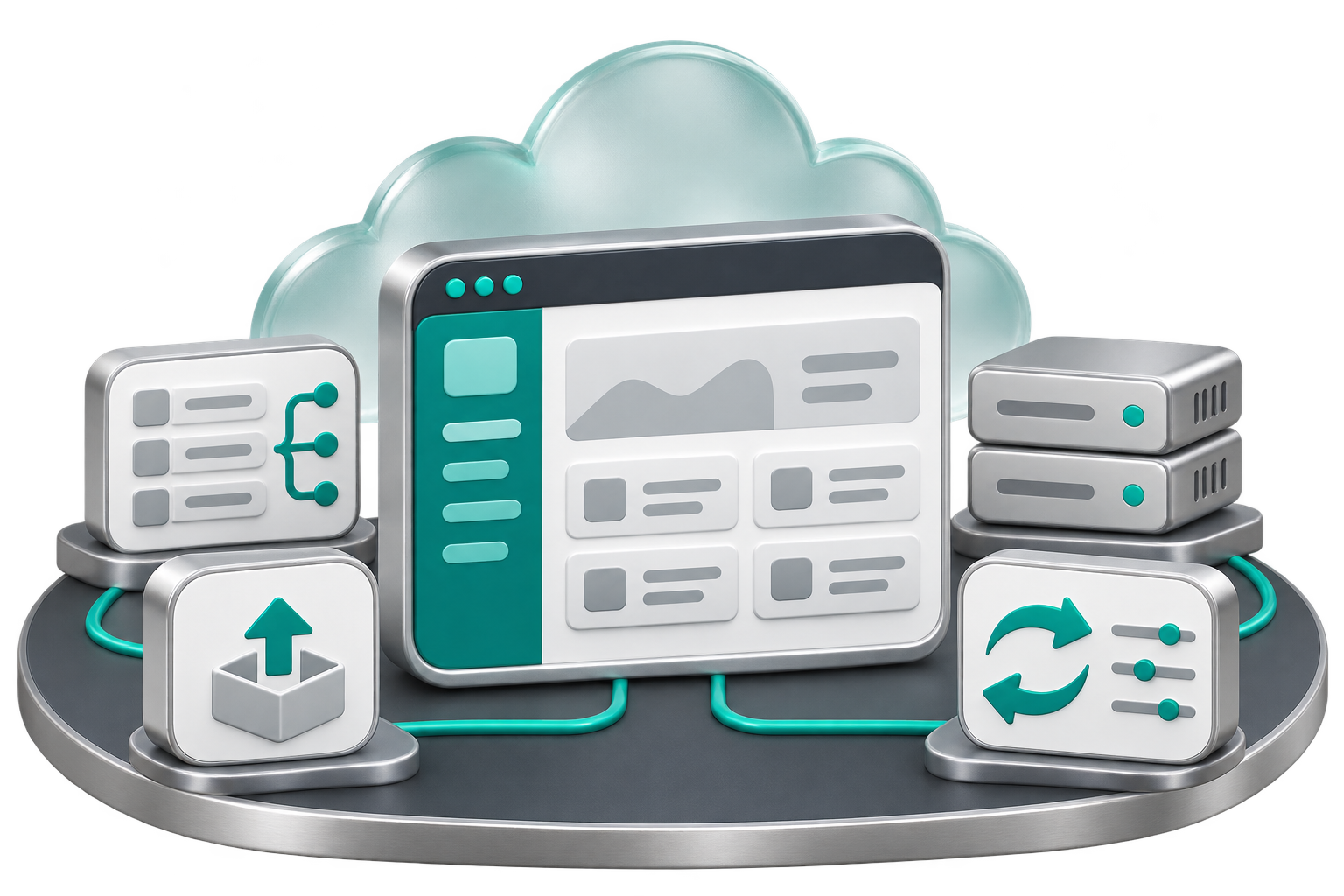
Cloud application dashboard connected to deployment, data processing, compute, and migration components.

Our Cloud & DevOps Delivery Process

Move from an assessed environment to reviewed changes and a documented operating plan. The delivery sequence accounts for application dependencies, access, migration constraints, and the checks needed before production changes.
01

Assess the Environment

Review the application, current infrastructure, deployment workflow, access, costs, incidents, and existing backups. Identify dependencies and prioritize the problems the engagement should address.

02

Define Architecture & Scope

Agree the target design, environment boundaries, access model, service responsibilities, budget assumptions, recovery objectives, and acceptance criteria.

03

Build & Automate

Implement the agreed infrastructure configuration, pipelines, containers, permissions, monitoring, and backup workflows. Keep configuration changes reviewable and document required credentials and dependencies.

04

Validate & Exercise Recovery

Check relevant deployment behavior, permissions, connectivity, alerts, and backups. Test agreed restoration or rollback scenarios and record limitations before cutover.

05

Deploy or Migrate

Execute the agreed rollout or migration plan, validate application behavior, and track the required cutover steps. Maintain a documented response if checks fail or recovery is needed.

06

Handover & Operate

Deliver configuration, access responsibilities, runbooks, and known issues. Where support is included, establish the monitoring, escalation, maintenance, and optimization cadence.

Featured Case Studies & Proof of Work

Explore how we architect, engineer, and deploy high-availability enterprise systems for real-world production environments.
Hand and iPhone 16 Pro 1
Blockchain

Tajir Wallet

Users faced high transaction latency, custodial security vulnerabilities, and fragmented interfaces when managing digital assets across disparate EVM and non-EVM blockchains.

React Native Rust Web3.js EVM
Go-To App
Cloud Services

Go-To App

Customers need a clearer way to explore local service providers and understand the professional information available when choosing whom to contact.

SachiGrocery
Cloud Services

SachiGrocery

Shoppers needed convenient grocery ordering with fast delivery and a frictionless mobile experience.

Where Cloud & DevOps Support Helps

For teams preparing a launch, migrating infrastructure, improving releases, or taking responsibility for an existing production environment.
Engineered for High-Compliance Sectors
01
01

New Products Preparing to Launch

Your application needs hosting, environment configuration, deployment workflows, access controls, and monitoring. Establish a practical setup with clear release and operating responsibilities.

02
02

SaaS & Customer Platforms

Your product needs repeatable deployments, controlled data access, visibility into failures, and a capacity plan. Connect infrastructure decisions to customer workflows and service dependencies.

03
03

Data & AI Applications

Data processing, model integrations, background jobs, and analytics workloads create distinct operating and cost requirements. Plan resource use, permissions, monitoring, and job recovery around the workload.

04
04

Infrastructure Migration & Modernization

You are changing providers, replacing an aging setup, or moving services into a different hosting model. Assess dependencies and define migration validation, cutover, and recovery steps.

05
05

Inherited Systems & Ongoing Operations

Your team is taking over an environment or needs operational help. Establish access ownership, configuration records, deployment procedures, backups, runbooks, and agreed support coverage.

Know Who Owns Your Production Operations

A production environment needs clear responsibilities for releases, alerts, incidents, recovery, and cost decisions.

We define how the systems are operated and handed over, including who receives urgent issues, which actions need approval, and how changes are recorded.
Runbooks, Recovery & Defined Support

Document the Environment: Record the agreed architecture, configuration, service dependencies, account ownership, and required access.
Define Release Responsibilities: Explain deployment checks, approval points, database change considerations, and responses to failed releases.
Route Alerts & Urgent Issues: Identify the client contact, reporting route, responsible responders, escalation process, and agreed coverage hours.
Exercise Recovery Procedures: Document backup locations, retention, restoration steps, and the results and limits of agreed recovery checks.
Plan Ongoing Maintenance: Scope updates, capacity reviews, cost investigations, access reviews, and infrastructure improvements. Support response commitments are specified in the agreement.
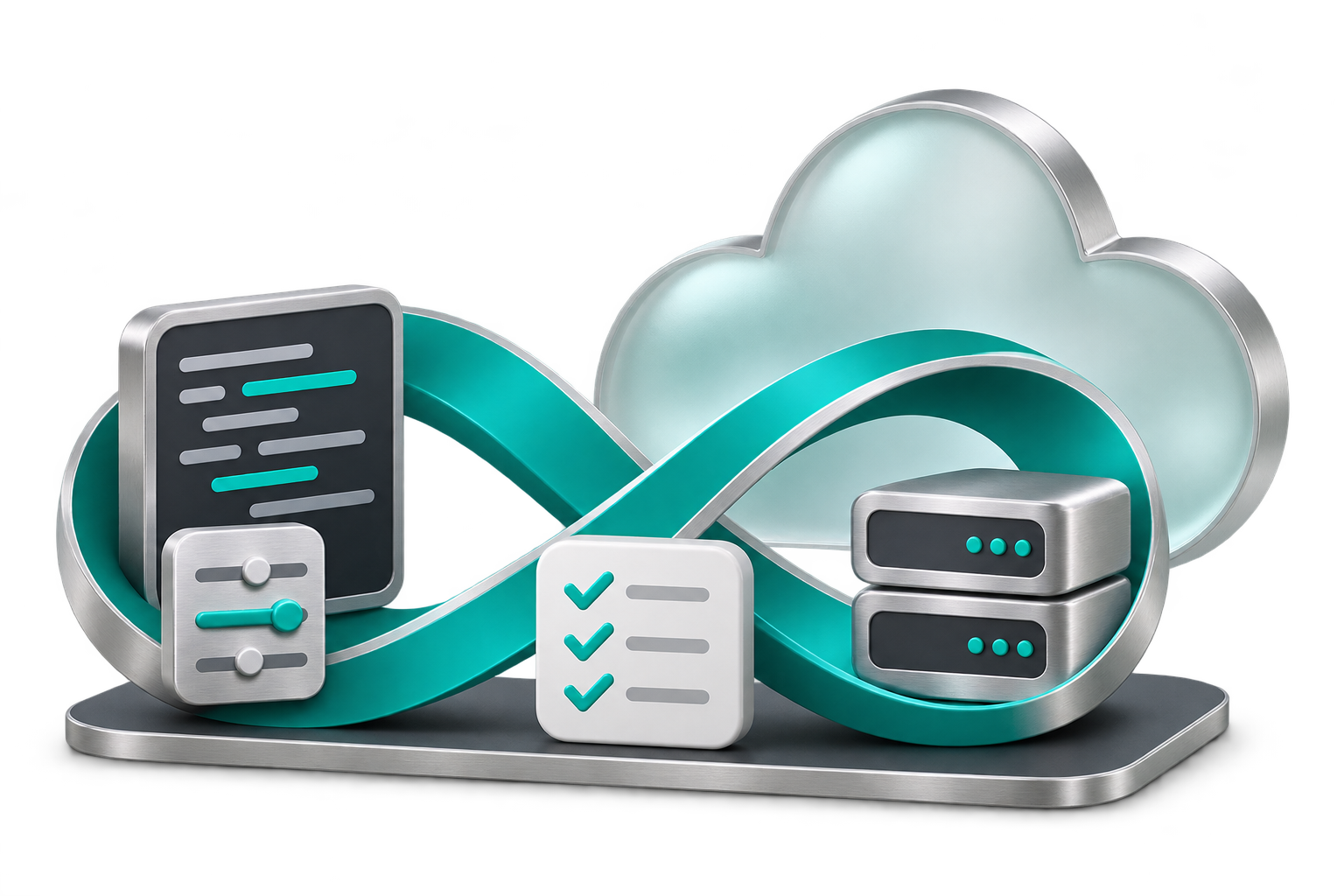
Cloud operations dashboard with monitoring, alerts, runbooks, servers, and backup recovery.

Benefits of Cloud & DevOps Services

01
Cloud and DevOps service benefit

Make Deployments Repeatable: Establish reviewed release workflows and consistent environment configuration.

02
Cloud and DevOps service benefit

Understand Production Behavior: Connect relevant metrics, logs, and alerts to operational responsibilities.

03
Cloud and DevOps service benefit

Clarify Access Boundaries: Define who and what can access infrastructure, credentials, and application data.

04
Cloud and DevOps service benefit

Prepare for Recovery: Agree backup requirements and verify the restoration procedures included in scope.

05
Cloud and DevOps service benefit

Make Cost Decisions With Evidence: Review actual usage, billing drivers, and capacity needs before changing resources.

06
Cloud and DevOps service benefit

Maintain Operational Ownership: Provide runbooks, handover guidance, and an agreed maintenance and support model.

Frequently Asked Questions

Answers about cloud setup, migrations, deployment automation, access, monitoring, recovery, costs, and ongoing support.

We provide architecture and migration planning, environment setup, CI/CD pipelines, infrastructure automation, containerization, access controls, monitoring, backups, recovery planning, and cost optimization. Ongoing operational support can also be scoped. Deliverables, system boundaries, access, and responsibilities are confirmed before implementation.

The engagement can include AWS, Google Cloud, Microsoft Azure, or an existing server environment, depending on the workload and access available. We assess the services in use, application dependencies, hosting requirements, and team ownership before confirming the supported scope. Provider selection follows the product’s requirements and operating budget.

Yes. We can assess current hosting, deployment processes, permissions, monitoring, backups, and cost drivers. The findings help define a prioritized improvement plan. Existing components are retained where suitable, with migration or replacement proposed when the evidence justifies the change.

We assess downtime requirements and migration options during planning. The achievable cutover behavior depends on the application, data changes, provider capabilities, dependencies, and budget. We define validation and recovery steps and explain expected interruption or risk. Zero downtime is not assumed or guaranteed.

A scoped pipeline can include source triggers, build steps, relevant automated checks, artifact handling, environment configuration, deployment approvals, and release validation. We also define the response to deployment failure. Application and database rollback requirements are assessed separately because reverting a build does not necessarily reverse a data change.

That depends on application packaging, deployment requirements, team skills, and operational complexity. Containers may help standardize execution environments, while some workloads are better served by managed hosting or virtual servers. Kubernetes is considered when its orchestration capabilities justify the additional setup and maintenance effort.

We agree the access required for the engagement, account ownership, identity permissions, and environment boundaries. Scope can include role permissions, restricted network access, secrets storage, and logging of changes. Credentials and sensitive configuration should be handled through the agreed access process rather than shared in public repositories or general project documents.

Recovery checks are explicitly defined in scope. We agree what is backed up, retention, storage location, access, and the restoration procedure, then exercise the selected recovery scenarios. Recovery objectives and limitations are documented. A successful backup job alone does not establish that the application can be restored within the required time.

Monitoring is selected around the application and service responsibilities. It can include health checks, infrastructure metrics, application logs, errors, background jobs, and selected user journeys. We define alert thresholds, delivery routes, responders, and escalation behavior while limiting sensitive information in telemetry.

We can assess actual spending, utilization, retention, data transfer, and capacity to identify justified changes. Recommendations consider performance, availability, recovery, and maintenance tradeoffs. Savings depend on the starting environment and workload, so a fixed percentage reduction is not promised. Provider charges and our service fees are identified separately.

Support coverage, monitoring responsibilities, response expectations, and escalation routes are defined in the agreement. Continuous automated monitoring does not by itself mean that engineers are available around the clock. If you need 24/7 incident response, this must be explicitly scoped and resourced before the engagement starts.

Account ownership, billing responsibilities, source repositories, permissions, and handover requirements are defined in the agreement. Delivery can include the agreed infrastructure configuration, pipelines, runbooks, and operating guidance. We document third-party dependencies and any restrictions that affect ongoing use.

The fee depends on the environment, number of services, migration complexity, automation requirements, recovery checks, and support coverage. Estimates account for suitable automation and the engineering work needed to validate and operate the changes. Cloud provider charges, software subscriptions, and recurring support are stated separately.

Timing depends on scope, access readiness, current architecture, data volume, external dependencies, and permitted change windows. A focused pipeline improvement differs from a multi-service migration or operational takeover. We confirm the sequence, assumptions, validation work, and schedule after assessing the environment.

We can scope infrastructure work around your access, hosting, retention, logging, and recovery requirements. Your legal or compliance advisers should define applicable obligations, which are then reflected in the agreed technical design. Certification, formal compliance assessments, and specialist security testing are separate deliverables unless expressly included.

Let's Build Your Next Digital Product

Whether you are launching a new platform, modernizing legacy systems, or expanding engineering capacity, Macromodule Technologies helps you move forward with clarity and confidence. We support you across product discovery, technical architecture, UI/UX design, software development, quality assurance, cloud deployment, and continuous improvement. By understanding your core business goals early, we define a clear, risk-free delivery roadmap before writing a single line of code.

From AI-powered platforms and custom enterprise software to blockchain systems, mobile applications, cloud infrastructure, and data-intensive products, we engineer secure, scalable solutions built around your operational strategy. Our focus isn't just on launching—we build a flexible technical foundation that evolves as your users, data, and business requirements grow.

Partner with an engineering team that takes complete ownership, communicates transparently, and stays laser-focused on delivering measurable, long-term value.

Discuss Your Project

Our Offices:

Head Office<span class="gradient-text"> (USA) </span>

Head Office (USA)

Address: 28 W Flagler St Ste 300B #324 Miami, FL 33130

Phone: +1 (321) 364-6867

Email: consultant@macromodule.com

Regional Office<span class="gradient-text"> (UAE) </span>

Regional Office (UAE)

Address: Business Centre, Sharjah, United Arab Emirates

Phone: +971 55 154 7284

Email: consultant@macromodule.com

Innovation Hub <span class="gradient-text"> (Pakistan) </span>

Innovation Hub (Pakistan)

Address: 61 C, Pia Housing Scheme, Lahore 54000

Phone: +92 (339) 0134700

Email: consultant@macromodule.com